Problematica: On Not Being Hildy Johnson

Consuming pop culture is one of my favorite introvert activities. In Problematica, I’ll explore the political implications of a specific pop culture piece — a song, a character from a film or book, a TV episode, etc. — that I love, regardless of how good, bad, or mixed its politics may be.

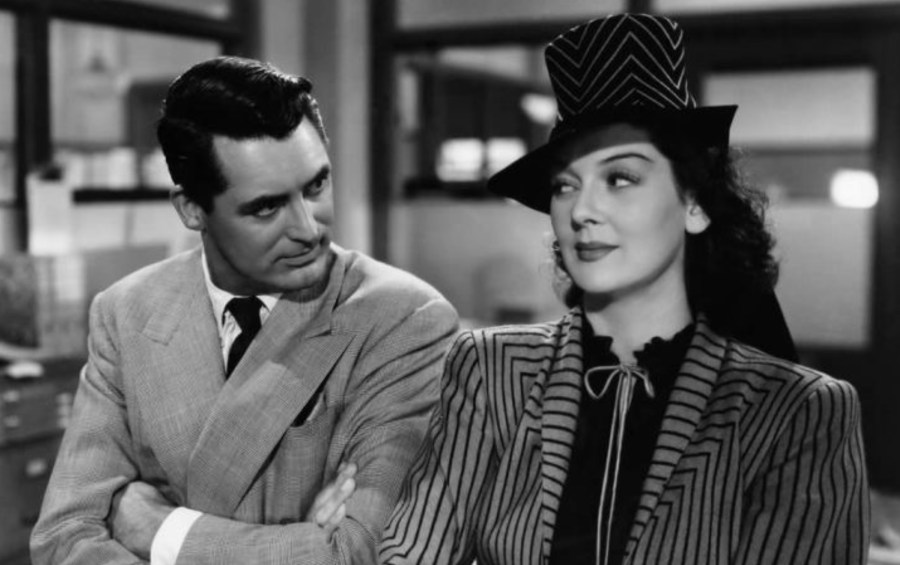
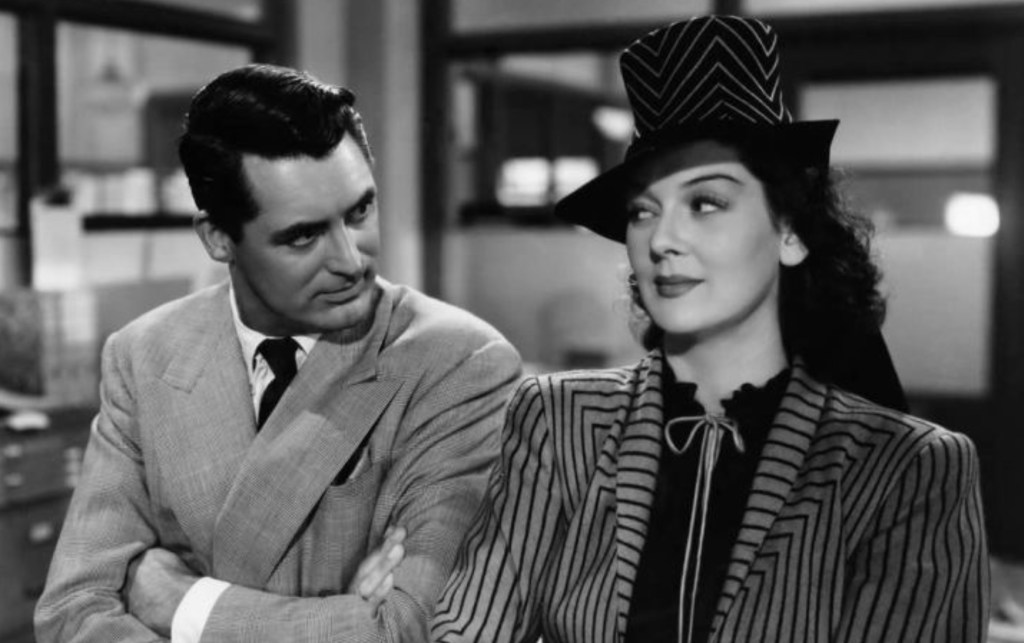
To understand my neurotic feminist dilemma with His Girl Friday, you must understand I’ve loved this movie since age twelve. Director Howard Hawks’s 1940 screwball comedy retelling of the Broadway hit “The Front Page” mostly sticks to the original story about shady newspaper editor Walter Johnson scheming to keep star reporter Hildy, who’s leaving the business to start a family with his soon-to-be wife. But in Hawks’s version, Hildy is a woman (played by Rosalind Russell) and Walter (Cary Grant) is both her editor and her recently divorced ex-husband.

Through adolescence and adulthood, Hildy has been one of my primary role models – brilliant, witty, tough, aggressive, a writer like me, but also a legend in her field. We never see her struggle with the kind of workplace sexism a woman would surely have encountered at the time (or now, for that matter), because every one of her peers knows she’s the best. In the opening scene, when she drops by the Morning Post office after a four month divorce/vacation hiatus, she breezes through this busy, buzzing newsroom as her colleagues pause their work to smile and wave at her. She owns the place. I’d never seen this kind of leading lady before, so confidently executing her power. Throughout the film she uses that power to harangue cops and politicians, gently press a prisoner for an interview, and firmly manage her naive, good-natured fiancé Bruce (Ralph Bellamy). But most of all, she draws upon that power to fight ex-husband Walter.

I’m going to reveal a spoiler about His Girl Friday that should be obvious to anyone who’s watched a romantic comedy, especially one starring the ridiculously smooth and dapper Cary Grant — Hildy ultimately ditches nice boy Bruce to reunite with Walter. And I’ve gotta admit, that outcome never sat completely right with me. As much as I’ve always adored this smart, fast-paced film and especially Hildy and Walter’s frenetic bickering, it made me sad to see my heroine go right back into this complicated relationship with a man who shows no signs of improvement. Walter is a ruthless, selfish, alpha go-getter. Even before he learns his ex-wife is marrying another man (he assumes she’s taken a job with another paper), he’s scheming to keep her from getting away. First he enlists Bruce’s help guilt-tripping Hildy into interviewing Earl Williams, a gentle but mentally unstable death row convict who’s seeking a stay of execution. Once Walter has her back in the game, he spends the rest of the movie orchestrating tricks to keep Bruce and Hildy apart so they miss their train to Albany on the eve of their wedding. She sees exactly what Walter’s doing. But when Williams escapes from prison, she can’t resist reporting the ensuing manhunt. Walter and his henchmen get Bruce arrested multiple times and even kidnap his mom at one point. Still Hildy’s drawn to this man who represents everything she finds foul and repellent about the newspaper business. “Walter, you wouldn’t know what it means to want to be respectable and live a halfway normal life,” she explains in the opening scene. So how can this self-assured woman with crystal clear moral judgment reunite with this slippery, chaotic cad?

I always wished Hildy could wind up with a character who’s a cross between Walter and Bruce, a love interest who matches her intellect but also exhibits the kind, sweet, and considerate behavior she seeks in a spouse. I guess I wanted her to be with someone like my husband – a wickedly funny, clever sociologist who is also affectionate and thoughtful. I could never see myself marrying a man like Walter, because my moral judgment precludes me from cohabiting with manipulators or mean spirits; I would literally rather live alone. How can Hildy settle for this jerk, and does her willingness to settle make her a flawed feminist figure?

I recently revisited His Girl Friday with fresh eyes, and a question I learned to ask myself when I reviewed TV episodes about abortion – does this character’s choice make sense? Framing the query that way, I came to the overwhelming conclusion that Hildy does indeed belong with Walter. Whether or not that outcome diminishes her feminist status isn’t that important to me once I accept that my role model’s attitudes toward love, sex, and writing are actually pretty different from mine.
To understand why Hildy is drawn to Walter, we need to examine exactly what makes her, as he says in the beginning of the film, “a great newspaperman.” On the one hand, she exhibits a maternal quality that sets her far apart from her peers. Walter himself notes this early on when he insists Hildy is the only one who can write the Earl Williams story because it needs “a woman’s touch”; he’s manipulating her, but he’s also correct. When Hildy gets her interview with Williams she subtly cajoles him into sharing the nonsense logic he had in mind when he shot and killed a police officer, which she uses to demonstrate his insanity (though the mayor’s handpicked medical examiner is eager to claim otherwise). Her thoughtful method stands in stark contrast to her fellow male reporters at the Criminal Courts Building, who spend most of the film lazily playing cards, cracking wise, chasing sirens, and stealing each others’ leads. There’s this incredible scene when Earl’s friend Mollie Malloy — a fragile, working class lady who testified in his defense — confronts these men in their office about all the lascivious lies they published about her. Hildy walks in to see them mocking Mollie as she becomes hysterical with rage. She calmly escorts the girl away from the room. When Mollie moans, “They’re not human,” Hildy replies, “I know, they’re newspapermen,” while throwing an extremely judgmental look over her shoulder. The men share an awkward silence until Hildy returns, stares them all down, and says, “Gentlemen of the press,” with a shake of her head – dismayed, but not surprised. It’s a gutting moment, and you sense that no other person could successfully shame this group. These unfeeling, misogynist jerks actually care what Hildy thinks of them.

But the reason they care is because she channels that maternal compassion into excellent writing. They even gossip about the piece she’s written on Williams when she’s called away to bail Bruce out of jail, saying there’s no chance her new marriage will last; someone as talented as herself could never give up journalism. As insensitive as this crew is, they quickly intuit  Bruce is more child than mate, hence their snarky remarks whenever Hildy has to save her fiancé from Walter’s shenanigans. (“Lioness rushes to defend cub.” “Man forgets hankie, mama goes to wipe nose.”) And they’re right. In pretty much every Bruce and Hildy scene, she’s shushing him or giving firm advice on protecting himself from Walter, even making up a little “newsroom superstition” fib about hiding his cash in his hat for good luck. There’s nothing romantic or alluring about this mother-son dynamic. It’s probably the worst use of that maternal quality which makes her writing so great. 

But there’s another characteristic that makes Hildy a great newspaperman, which has nothing to do with her compassion or maternal nature – her insatiable desire for the story. She’s no different from her ruthless peers in this regard, except smarter; instead of chasing sirens she tackles a prison guard to find out how Williams escaped his cell. No matter how many times Walter pulls some sneaky scheme to get Bruce in trouble, she can’t resist writing this story because she keeps getting the scoop on everyone else. And this, I finally realized, is the major difference between my fictional writer role model and me. I’m not a journalist. I write pop culture pieces and personal essays, the kind of content Hildy might reductively call “sob sister stuff.” She’s a reporter. She gets tired of hunting leads and chasing people down for quotes in the middle of the night, but that doesn’t change the fact that she’s really good at it. Rosalind Russell shines in this role. The gleaming eyes and conspiratorial whisper she uses when she calls Walter to tell him about her latest hot tip indicate early on that her colleagues are right – there’s no way Hildy can give up this game to marry some unsexy schlub.

And that leads us to the Walter and Hildy dynamic. Grant and Russell have an incredible chemistry that’s unlike any other dynamic I’ve seen on screen. It’s like a rollercoaster on repeat. In the first scene we see them bicker about the circumstances that led to their divorce. Before long they’re hollering and she’s throwing her purse at his head. Then he seems to relent. In the next scene, they’re bantering. He convinces her to do the interview. Everyone’s laughing. They’re collaborating. Then he eventually double crosses her (gets Bruce arrested for solicitation), and they’re back to hollering. I finally realized during my latest viewing that this is sex for them. Several years into the Hays Code era, Hollywood films couldn’t depict anything resembling sex on screen. So instead there’s this fantastic scene when Walter stops Hildy from running off to get Bruce out of jail. With machine gun delivery Walter badgers then flatters Hildy into sticking around to finish the story. “How can you worry about a man who’s resting in a nice quiet police station while this is going on?… Hildy, you’ve got the whole city by the seat of the pants… This isn’t just a story, this is a revolution!… They’ll be naming streets after you… There’ll be statues of you in the park.” They circle about the room as they speak. First she argues, then she agrees, then she gets dreamy eyed as she fantasizes about exposing their corrupt mayor. And when he starts blowing smoke up her ass about streets and statues, she tells him to shut up so they can get to work. It hits all the classic beats of a seduction scene, starting with friction and escalating to submission. But there’s little physical contact and it all centers around creative collaboration. Frankly, it’s incredibly hot.

So as shady and manipulative as Walter can be, I get why he’s the only one for Hildy. It’s not just that he’s her only match for wit. There’s something sweet and incredibly unusual in the fact that he refuses to see her give up her profession. I think of other films from this era that starred Barbara Stanwyck (my all-time favorite) as a smart, self-sufficient working woman – the magazine columnist from Christmas in Connecticut or the stripper from Ball of Fire. In these and many other films from that time, the working woman lead character ultimately trades her job (i.e. her financial independence and perhaps some self-fulfillment) for love. Her career ambition gets in the way of romance. For Hildy and Walter, it’s the opposite. Their romance isn’t always what she wants it to be, but it’s intense, passionate, and thrives upon the combined power of their professional talent. It isn’t the love story I would choose for myself, because it involves entirely too much fighting. But then I’m not the sort of fighter that my heroine Hildy Johnson is.

The Doldrums

I’m more an anxiety person, so it took a long time to notice I was depressed. Waking up in the middle of the night to ponder Big Social Problems had exposed me to much tossing, turning, and occasional doses of antacid. But waking up in the middle of the night to sob over a deep sense of inadequacy and hopelessness in the face of those problems – well, that was new. 

I’m usually content with the humble busy-ness that fuels my more buoyant self. When not overcome with existential malaise, I get lots of stuff done. I raise a child. Work retail. Write.  Organize Medicare for All canvasses. Cook. Clean. Walk. Occasionally run, lift weights, and sing karaoke. I’m not extraordinarily good at any of those things but sometimes impress even myself with proficiency. Creating and producing brings its own joy, no matter how limited my impact. And as for the Big Social Problems – I was doing my bit to chip away at this capitalist system that’s ruining our planet and feeding the other major maladies. A little something is better than the nothing most people do. In my small way, I was helping.

But between wintry weather that just wouldn’t go away, and the increasingly bleak state of our crumbling planet, I lost my motivation to do many of those things. The self-preserving tasks were easiest to abandon. Oven-ready frozen comfort foods and take-out required less effort than cooking healthy and washing dishes. In turn, exercise became more dreadful. So why not just quit that altogether? In fact, why bother with a lot of things? The planet’s temperature could rise 14° Fahrenheit in 100 years. Perhaps I’m alive just in time to witness the beginning of the end. In which case, did it really matter if I got bloated and lazy? 

I didn’t lose motivation to the point of shirking my responsibilities to others (child, spouse, work, comrades), so then I just began questioning the value I actually held to those groups and entities. As a person who earns well below a living wage, what is my value in a capitalist society? If this is the system going down with us during this mass extinction, am I not ultimately defined by those measures of success or failure? If I actually saved money for my family by ceasing to exist (because the loss of income represented by my dead body’s inability to sell its labor would be outweighed by lower health insurance premiums + a cheaper grocery bill), then what’s the big loss? Sure, my kid would be sad and so would my husband. But he is a likable guy — definitely more popular than me — and way better than most men. He actually likes women. He could find another one. Maybe she’d make more money than I do.

So that was my general state of mind a couple weeks ago! Some of you already know this because I tweeted many of these thoughts, though I waited to do so until after I’d scheduled a visit with my therapist (whom I’d last seen when I had a rare panic attack during the Kavanaugh confirmation). I figured at that point I was free to lay my demons out for display on social media, because if anyone said, “Jesus, Tara! GET SOME HELP,” I could be like, “Duh, I know, I’m working on it.” 

So during that week between texting my shrink and seeing her, I shared a lot of dark thoughts I’d never before considered posting on such a public platform. And you know what? The release felt great. I’m so used to bottling my saddest, most vulnerable feelings based on the assumption that someone else in the vicinity has it worse than me. As my therapist later noted, that’s some classic Adult Child of an Alcoholic nonsense, and it’s actually pretty rad that I broke through my “suck it up” martyr reflex. Because you know what’s SUPER rad? In 2019, I can go on social media and tell people I’m depressed… and they get it! Not only do a lot of people get it, they relate. And they share kind, generous observations like, “I take medication for that,” or, “I also question the value I bring to my marriage.” Or they say things they appreciate about me, like, “I know I don’t know you, but you seem like such a nice mom!” I’m paraphrasing a lot for the sake of other people’s privacy, but hopefully you catch my drift. I found deep wells of compassion when all I expected was a nonjudgmental void.

The therapy appointment went well. We talked about how my atheism feels weirder when I contemplate mass extinction, and we talked about “The Good Place” (my favorite TV show). She encouraged my practice of taking long walks, and recommended a full spectrum lamp for next winter. Because this is cognitive behavioral therapy, we focus a lot on habits, and since seeing her I notice that the self-preserving habits I’d shed during winter are the very ones that keep my humble busy motor buzzing. My goals for April are pretty simple – at least two blood-pumping fitness routines per week (in addition to my retail workout) and five fruits/vegetables per day. It’s been fun cooking again – I missed the creativity sparked by a well-stocked fridge. The process of exercising might be less enjoyable, but I’m definitely breathing and sleeping better.

I still feel shaky, as one does after a nasty illness. It’s like my soul had a puking virus. I’m not so quick to volunteer my time beyond Medicare for All and basic officer duties for our Democratic Socialists of America branch. I spend many evenings lately coloring pictures of flowers and half-watching “Murder She Wrote” reruns on Amazon Prime. I have a feeling I’ll look back on this practice with some fondness, like the spring when I read a bunch of Jane Austen, or the summer when I was 12 and became obsessed with 1960s “Batman” TV show reruns. So I’m savoring it, as all pleasant present moments should be savored.

I’m still very worried about the future. But there’s much to love about the present. I turn 42 on Sunday and can definitely say it looks more than twice as good as age 21 was. I don’t know if I would have expected that then. I certainly couldn’t have visualized the sorts of communities and relationships that bring me joy and comfort now. 

My Case for a Mutual Indifference

I follow this Facebook group with hundreds of women members, one of whom recently posted about a frustrating experience with a male client. He’d made some dopey sexist remark about her having grown out of her “scared little girl” phase of being a new employee. She laughed off his backhanded compliment but felt awful afterward; her feminist instinct was, “I should have confronted him.”

I couldn’t bear to read the comments on her post because in my experience, fellow frustrated women tend to jump into, “Well you know what I would have said” mode, which is not helpful. In fact, I see that as a very alpha response more reminiscent of patriarchy than feminism. My feeling is that the person posting about that experience did nothing wrong. If she had chosen to chastise or insult the fool, that would have been fine, too. If you, reader, are a woman who enjoys lashing back at sexist men, I sincerely cheer and encourage you to keep up your great work. Guys like that definitely deserve your harsh words. But if you’re a woman who dreads having that confrontation, may I suggest an alternate response that doesn’t require the sexist man’s participation at all – simply write off his existence and ignore him as much as possible. 

The thing about telling off a sexist dude is that you’re probably not gonna get anything out of him beyond his temporary embarrassment or anger (both of which can be very hard to take, especially if you must deal with him while making a living). He might stop saying those dumb things out loud in front of you to avoid another confrontation, but he’s unlikely to think real hard on what you taught him and change his attitude for the better. He probably doesn’t care about the lesson you’re trying to teach him, because you are a woman and why would he care? We don’t matter to most of them, beyond our capacity to mother, serve, or satisfy. Once you realize you’re dealing with that sort of man — the kind who doesn’t care about your insides — it is in your best interest to stop caring what he thinks or feels. Let his insides be as invisible to you as yours are to him.

What I’m advocating for is mutual indifference. We cannot entirely avoid dealing with these men, especially at work. But we can choose to end conversations with them as quickly as possible and refuse to mask our boredom when they blather on about themselves or their precious ideas. My sister calls this latter technique “napping bitch face” – for when the mansplainer is so boring that you practically fall asleep. You don’t have to tell the guy to shut the fuck up (unless that’s something you enjoy, in which I case I applaud you). But neither do you need to feign interest. The nice thing about writing off these dullards is that it frees you from wanting to be liked by them. So go ahead, take a nap. Or just let your mind wander to more pleasant thoughts – that’s what they do when you speak about something other than them.

Becoming a mother helped me notice the vast number of selfish men who want nurturing attention from women without giving any of that attention in return. Especially as I’ve found myself aging out of the range of their jerk-off fantasies, I can easily recognize this sort of man. He isn’t talking to me in the hopes of maybe getting laid, but still wants something from me that he has no intention of reciprocating. Maybe he wants me to listen to his problems or tell him his ideas are smart. But if I start discussing my problems or ideas, he either talks over me or gets that faraway look in his eye that indicates he’s having his nap. 

If I told off every man who engaged me this way, I’d be lecturing nonstop. That’s not my idea of fun or fulfillment. Instead, a switch flips in my brain and I think, “Ah, one of them.” And I avoid conversation with that man as much as possible. This system works for me.

I also apply this technique to my organizing life. As much as I can, I avoid working with men who exhibit those characteristics. Fortunately, I have many guy comrades and friends who actually like and respect women; I tend to arrange more meetings with them. Sometimes we’ll get together for beers or karaoke and I’ll have multiple conversations with these gents, during which they maintain eye contact and respond to the things I’m saying instead of the thoughts in their own head. It’s honestly a little jarring, because my social expectations are now so low. 

Don’t get me wrong, I do not want to underestimate the high level of sexism and misogyny in left organizing circles – it’s a big problem, and in recent days I’ve heard rumblings from a couple socialist organizations about high-level male members getting away with terrible abusive behavior. I can only say that here in my little corner of socialist organizing, my filter definitely works for me. And in the end, while creeps and dullards still abound on the left, I do believe there are a slightly higher-than-usual number of dudes who actually like us.

But even if there weren’t, we’d still have women (and nonbinary folks!). From nurses to teachers to flight attendants to teenage climate change strikers, we’re doing some of the most impressive, impactful organizing right now. As long as we’re good comrades to each other and don’t get bogged down in exhausting fights with silly men, I believe we’ll continue kicking ass on a major level.

Sirens of the Rust Belt, Sirens of the Cornfield

For the last few months I’ve been keeping an eye out for good socialist candidates who can primary some of our centrist Democrats in office. A friend suggested I consider myself for the role, but I immediately eschewed the notion. I’m not an “on-stage” personality. Perhaps time and experience could help me overcome my shyness and fear of public speaking. Or maybe I could just learn to fake it. But they’ll never completely cure me of my Midwestern accent. I won’t let them. 

I’ve worked on two progressive political campaigns for Midwestern-bred women running in the south. Both lost but came really, close considering they were outspent underdogs. And both faced opponents whose main modes of attack were essentially, “She’s not from here, don’t trust her.” One particularly slimy opponent warned of my candidate bringing “Detroit values” to our southern city, even including images of abandoned factories in his campaign materials. Sadly, these tactics work. Never underestimate the power of provincial xenophobia. But I also wonder if these women would’ve been more warmly received had they come from some other faraway place with a more sophisticated or less noticeable accent. I heard voters make fun of both these women candidates’ voices. People who aren’t from around those parts really hate the way we speak.

I love the way we speak. I love Midwestern women. They’re my favorite group of people. So many times since I moved to the south, I’ve met some charming, plainspoken lady with a hilarious, dry wit and wondered, “How’s she so cool?” Then I find out she’s from Cleveland, or rural Indiana, or somewhere around Chicago, and I think, “Ohhhh, THAT’S why I like you so much.” Then I notice they make some of the same nasal vowel sounds that I do. 

Of course I speak of many accents – a white woman from Cedar Rapids doesn’t sound the same as a black lady in Flint. But I appreciate them all because they’re the perfect complement to the down-to-earth, no-bullshit, wholesome truth of what we say. A Midwestern woman’s spoken wisdom is like a big old scoop of mashed potatoes slapped down on the plate in front of you. Maybe it’s not the most delicate delivery or elegant presentation, but that doesn’t make the mashed potatoes any less delicious. Why would you complain about rich, creamy carbs? Dig in!

When I hear a Midwestern woman tell the truth in her mashed potato voice, I feel inspired. These sirens of the rust belt and the cornfield are my role models. Roseanne Barr busted my heart by proving herself an unhinged bigot, because I used to considered her the patron saint of Midwestern women. That loudmouthed, sarcastic, working class Illinois mom she portrayed on TV reminded me of countless women I’ve known (sometimes myself). But I no longer care to honor her legacy. So instead, I seek inspiration from these notable daughters of the heartland ~

  • Kim Deal, but especially that outtake from “Surfer Rosa” when she tells the rest of The Pixies about the pedophile high school coach (“All I know is that there were rumors he was into field hockey players…”). Here’s this cool as hell woman bassist, performing on one of my all-time favorite rock albums, alternately trilling and shredding her voice on songs like “Gigantic” and “River Euphrates”. And then for a moment you hear her conversational voice and she sounds like a judgmental Ohio mom talking very frank shit about a very bad man. That twang when she says, “They were so QUIET about it,” fills me with joy. That’s the sound of home. I feel protected.
  • Mary Wells and Madonna, but specifically their inability to pronounce the “t” in “wanted.” Listen to “You Beat Me to the Punch” or “Crazy for You.” According to these Mitten State ladies, the appropriate pronunciation is “wah-nid.” That’s that sloppy mashed potato quality coming through, and I love it. But also they’re pop music icons, so who’s gonna argue with it? On that note, I’d like to say to every snobby, out-of-state student at the University of Michigan who ever had the nerve to move to my state and tell me I pronounce Mary, merry, and marry wrong – guess what? They’re all pronounced the same. Suck it!
  • Rep. Rashida Tlaib, when she said of Trump, “We’re gonna impeach the motherfucker.” Much as I admire and respect this congresswoman for trash-talking our troll president, and specifically for referring to him by that apt epithet, I didn’t watch the clip of her saying those words until a few days ago. I read 99% of my news, which is how I learned about her glorious taunt. It never occurred to me she would be making this beautiful statement in the same tone of voice I associate with every blunt, salty woman from my hometown. (Speaking of which, Midwestern Muslim women are a particularly lovable subset of my favorite group of people – they consistently disprove every stereotype you might believe about their supposed timidity.)

Obviously, I never noticed these accents until after I moved to the south and people would make fun of the way I say words like “cotton” (slightest hint of a t-sound, more like “KAHt-ihn”). Just as I’ve learned to sprinkle “y’all” throughout my everyday dialogue, I’ve found myself pronouncing my Ts a little harder. When I go back to Michigan, I’m stunned by the strength of my friends’ accents, which had been invisible to me before I moved away. Like so many other aspects of the rust belt, I suppose I adore that sound more for its familiarity than its pure aesthetic value. But it isn’t just nostalgia that feeds my admiration. There’s an authenticity in this manner of speaking that feeds my soul, much like a hearty pile of mashed potatoes. 

I know what people from other places think. They find us annoying, unrefined, lowbrow. They complain about the women’s voices more than men. Maybe it’s the higher pitch combined with those nasal vowel sounds that irritates them. Or maybe misogyny is just that pervasive. Either way, their snobby aversion just makes me wanna turn up those nasal vowel sounds and drop my middle-Ts even more. I believe there’s power in using that grating siren sound to tell the truth. And whether or not I can get myself elected to office, I’m gonna use it.

Problematica: Kelly Bundy Gets a Job

Consuming pop culture is one of my favorite introvert activities. In Problematica, I’ll explore the political implications of a specific pop culture piece — a song, a character from a film or book, a TV episode, etc. — that I love, regardless of how good, bad, or mixed its politics may be.

Married with Children, Season 7 Episode 8 “Kelly Doesn’t Live Here Anymore”

I’ve always had a soft spot for Married with Children, a sitcom that ran for eleven seasons after debuting during Fox’s 1987 network premiere. The Bundys were so different from other television families I was used to seeing at the time. They weren’t the first working class clan on an American sitcom, but they were the first unabashedly trashy one. 

MWC is the closest thing we’ve had to a John Waters-created sitcom on broadcast network TV. The show plays with a lot of silly stereotypes about suburban white trash. Patriarch Al is a miserable shoe salesman married to lazy housewife Peg. They have two kids – dorky wiseass Bud and slutty nimrod Kelly. Perennially broke, the Bundys live in an ugly suburban Chicago home with tacky decor. They’re frequently mean, occasionally sweet, but always sleazy. Al leads a proto-Men’s Rights Activist group called NO MA’AM (National Organization of Men Against Amazonian Masterhood). Peg gleefully sponges off of Al’s wages and cares so little about homemaking that she extinguishes cigarettes in food as she cooks for the family. Bud can’t get laid so he makes out with the vacuum cleaner. And Kelly is essentially a walking, talking “dumb blond” joke – popular (unlike Bud) because she’s hot and puts out, but also deeply stupid. I’ve never found any of these stereotypes truly offensive because this is such a goofy, intentionally lowbrow show.

I never found the Bundys especially relatable, either. But after years of being told that “normal” TV families like the Bradys and Huxtables all lived in comfy, well-furnished abodes where everyone essentially loved and supported each other, this freak show was a refreshing sight. My family loved MWC and videotaped it every week when it first premiered. We savored this program that dared to be funny in a way family sitcoms never tried before.

Once The Simpsons and Roseanne came along and broadened the catalog of dysfunctional, working class sitcom families, my interest in MWC waned. But back in the mid-90s I caught this episode in syndication and it quickly became my favorite, a feminist pop culture piece that deserves a spoiler-filled tribute (I’m just hitting the highlights – it’s totally worth watching even if you know what’s gonna happen). If you’re familiar with MWC, you might assume this episode would feature yuppie neighbor Marcy Darcy. After all, she is a self-proclaimed feminist (and sexist Al’s arch nemesis). But she’s not here at all.[1] Her absence from this episode will make sense later…

Believe it or not, the feminist heroine in this scenario is Kelly, who must get a job after Al demands that someone in the family start pulling their financial weight. Though turned off from the idea at first, Kelly warms up to the notion because she’s going through an existential crisis and seeking  a sense of purpose. Peg, on the other hand, is mortified – “Wanker women don’t work!” Yes, Peg’s maiden name is “Wanker.” God, I love this show.

When we next see Kelly dressed and ready for her burger waitress gig, her enthusiasm quickly fades after the scummy diner manager/cook tells her she’s gonna hate it. And then we dive into my favorite musical sequence from any TV show ever. Set to the Eurythmics and Aretha Franklin’s feminist anthem “Sisters are Doin’ It for Themselves,” we see angry, impatient diners banging their silverware to the beat as frantic Kelly fumbles about the room – serving cups of water with her hands all up in the beverage, busing napkin dispensers along with dirty dishes, squeezing a ketchup spill out of her apron and onto someone’s burger. This scene cracks me up every time I watch it but also triggers anxious memories of my own brief stint as a burger waitress.[2] The moment when she dissolves into tears as customers scream at her is only a slight exaggeration of my worst day on the job.

Things get worse for Kelly when the cook calls her “the stupidest girl I’ve ever had working here,” right before he asks her out on a date. But she’s used to fending off scumbags. The real indignity is when a former high school teacher conducting a “Scared Smart” tour brings a crowd of young girls by the diner to see how far pretty, popular Kelly has fallen (the teacher hates Kelly for sleeping with her husband, of course).[3] And then when a dead tired Kelly goes home with bags of half-eaten burgers and fries — which Al and Bud devour with great delight — she pitifully asks for her mommy only to be greeted by Peg in full mourning garb. “I don’t have a daughter,” Peg says. Physically and emotionally broken, Kelly tells Al she wants to quit. But then he offers this pep talk – “Bundys are losers, not quitters.” That might as well be the theme of the entire series. 

Emboldened by her dad’s advice, Kelly dons a retro beehive hairdo and decides to fully embrace her waitress identity. Peg later comes by the diner to offer forgiveness, adding, “Love the hair!” But the big turning point is when a scantily clad teen girl visits Kelly to seek advice on sneaking out of her parents’ house to go to a party. Suddenly in a position to espouse useful wisdom, Kelly coaches the girl as Peg watches with deep admiration. Now mom is proud of her daughter for ignoring customers to chat with a friend. Peg notes, “This diner is like a husband to you. It gives you shelter and money, and you don’t have to do anything to earn either!” At last, Kelly has found her purpose, dispensing advice to other young promiscuous girls who like to party – she then announces herself as, “Kelly Bundy, Philosopher Waitress!” And then when a customer demands service she says, “Drop dead… but stay in school.”

The episode ends with Kelly advising a gaggle of teen girls. As they leave and closing time approaches, she flits from table to table, collecting tips. Then she casually hip-checks the jukebox. While “Sisters are Doin’ It for Themselves” plays again, Kelly props herself up on a stool, smiles, and counts her cash. It’s so beautiful! And then the icing on the cake – credits roll and reveal the episode was directed by Amanda Bearse, the actress who plays Marcy Darcy!! I still remember my friend and I hollering with delight the first time we saw that. It’s just so perfect, you guys.

So yes, Married, With Children slut-shamed Kelly, week in and week out. I guess that never bothered me because it never seemed to bother her character (though it definitely did bother this wealthy suburban housewife/anti-obscenity activist/Romney family-in-law who led a sponsor boycott of the show in 1989). Like the rest of the Bundy clan, she’s just a likable loser looking for a little dignity. So I 100% celebrate an episode that tells young working class women like Kelly Bundy this very important truth – most jobs are stupid and shouldn’t define your sense of self-worth, but making your own money totally rocks. Keep counting them bills, girl.


[1] I’m a little sad to not write about Marcy in this context because she’s the most pitch-perfect embodiment of a terrible, white corporate feminist since Lucy from The Peanuts Gang. But that will have to be another Problematica post.

[2] It was one of the hardest jobs I’ve ever had and if you don’t tip well, you’re dead to me.

[3] Again, a similar thing happened to me – a couple years after I quit working in the nonprofit arts world, a former fellow board member mocked me when she spotted me wiping tables at a coffeeshop gig. The difference was that her amusement in my seeming downfall was purely classist in nature, as I never slept with her husband (though he was noticeably waaaaay hotter than her ::cough:: marriage of convenience ::cough::). Hope you’re reading this, Heidi!

Bless Me Reader, for I Have Sinned…

It’s been over three months since my last post.

To give you an update on my life since my most recent essays (about my cat dying and the time I yelled at my Senator’s lackey about Brett Kavanaugh), you should know that a major development has occurred – I finally got a job!

It is part time. It is retail. It’s about as pleasant and respectful as an hourly wage work environment under capitalism can be, which means I feel extremely lucky to have this gig. I’ve certainly had worse.

I earn enough to keep us afloat, while still having time to raise a child, organize with my Democratic Socialist comrades, and work on my other writing project.

I wish I could tell you more about this gig, because it’s a consistently entertaining part of my everyday life. But I’m very serious about adhering to their social media policy, which I’ve expanded to cover my blog writing. Essentially, it’s “don’t ask, don’t tell.” I can identify myself as one of their employees as long as I maintain a thoroughly unoffensive online demeanor. Or I can continue cussing like a sailor and talking shit about capitalism (like I do, especially on Twitter, CONSTANTLY), and keep their good name outta my filthy mouth. I opt for the latter. They won’t go looking for me on the internet. But if I draw attention to my employment with them, I’m inviting scrutiny.

So I say very little about this job when I’m online. And the corollary is that when I’m at work, I say very little about my personal life. That’s fine by me. Being introverted, I’m not keen on talking about myself in person anyway. The need to mask my political agenda is a convenient excuse for remaining mysterious. 

Sometimes feeling like a spy is fun, but only on a part-time basis. During the holidays, work became full time and I felt like I was undercover for half my waking hours. It wasn’t bad exactly. But I had no time to nurture this site, which left me feeling a bit dead inside. I’m really fond of this format I’ve created here. It very much suits the sort of storytelling I want to do, and I’m proud of the Introverted Comrade pieces I’ve written thus far.

I truly enjoy all my major obligations – parenting, organizing, work, and writing. But it’s too easy to let that last one fall off the agenda. No one expects this of me. I don’t lose income when I don’t write, because I don’t make any money from it. My child doesn’t suffer, nor do I let the comrades down if I fail to post a personal essay. 

But if we lived in the sort of socialist utopia I fight for — with guaranteed income, childcare assistance, and single payer healthcare — I would spend a significant chunk of my day at a desk, with a cup of coffee, occasionally staring out the window, writing true stories about my  life. This project would be the daily objective, not the thing I do if I can spare a few hours here and there.

So now that the holiday season is behind me and I’m in the mood for resolutions, I’m committing to posting here twice a month. The only way I can make that happen is by occasionally giving this task priority over all the other things. Sometimes the kid and the comrades will have to wait. Still gotta sell my labor, but I’m not complaining about diminished hours here in the slow season. 

So I get to be more myself again here at Introverted Comrade. Yet I also remain a spy. If you’re a friend or comrade who lives in town, come visit me at work sometime. I have so many amusing stories to tell that I can’t share here. Otherwise, catch me on this site, twice a month. I’ll draw upon my other muses, and promise to not be boring.

The Kind of Energy I’m Channeling Right Now

It was Film Festival week. It was St. Patrick’s Day. I was tipsy after a long workday at the theater and a long evening drinking beer with my friends. The bar was closing and I was on my way home to go to bed when I got a phone call from work. 

It was 2 a.m. Surely this had to be a joke. “Hello?” 

“Tara, it’s Gary. Nobody’s here to pay the sex workers and this one lady is FLIPPING OUT. I need you to get down here immediately.”

Oh boy. Film Fest drama to the extreme.

I asked my friend to change course and drive me to the theater. On the way there, I tried to imagine what could have gone wrong. Three days into the Festival, I’d already cleaned up so many of their messes. Such was the nature of Film Fest week. Their people took over the theater with their wacky, jam-packed program of avant-garde films, musical presentations, and performance art pieces. And I made sure they didn’t burn down the building. I figured that since they’d brought in the touring Sex Workers’ Variety Show in the past, they had that component under control. Clearly this was not the case.

My friend dropped me off me near the stage door. I let myself in, turned past the dressing rooms, and immediately spotted the lady in question. She was thick, with broad shoulders, long hair, and a booming voice that would not stop. “And we are not fucking LEAVING until one of you gives me a goddamn check. And until one of you gives me a check, I’m gonna say that you’re a scumbag,” she pointed at tech director Gary, then continued, turning to every stagehand in the vicinity. “And you’re a scumbag, you’re a scumbag, you’re a scumbag.” Finally she got to me, “And you’re a scumbag. And you should all be ashamed of yourselves!”

Now if I’d been a fool, I would have said, “Well, actually it isn’t my fault because I work with the theater, see. And the theater has rented the building to the Film Fest. And the Film Fest coordinated this evening’s program with the University’s art school. And the art school students decided to bring in your show, so they’re the ones who should be paying you right now. So pardon me, madam, but I am NOT a scumbag. I’m just a drunk operations manager who got called into work at 2 a.m. Please do not besmirch my good name!”

All that background info was true. But I could see her rage, and felt like keeping my head attached to my neck, so I didn’t say a word of it. And more than that, I respected her rage. She should be pissed! So instead of talking back to her, I stepped into action, made a couple calls, and cut her a check. I knew with three non-profit entities involved (the Film Fest, the art school and the theater), it would be months before we’d get our money back. But I also knew no one wanted to pay union stagehands to hang overnight with a disgruntled artist who was absolutely not going to leave. So I made it happen.

I thought of that intense, outraged, and successful woman when I paid a visit to my Senator’s office last week. I didn’t prepare a statement for whatever lackey would speak to me about Brett Kavanaugh’s confirmation. I knew no matter how carefully I planned those words, nothing I could say would move the Senator to change his “yes” vote to a “no.” All I knew was that I wanted him (or his lackey, by proxy) to get a taste of my rage. 

The Senator’s state director met me, my spouse, and our friend in a vestibule outside his office.

He shook my hand and then I bluntly asked him, “Am I correct in assuming the Senator plans to vote ‘yes’ on Brett Kavanaugh’s confirmation?”

“Yes.”

“Well I just want you to know that I think you and your boss are absolutely disgusting.”

This little man in freshly pressed pants and a shimmery necktie was aghast. “But you can’t say that! You just met me!”

And then I was channeling the lady from the sex workers’ show big time. I knew I wasn’t going to get my way like she did in her situation, but I reacted how I think she’d have reacted if I’d been foolish enough to argue against my guilt-by-association.

I continued. “I’m here to make sure you have a terrible day.”

He staunchly replied, “I won’t!” 

“Well you should.”

“I won’t, and I’m going to ask you to leave.”

“No! You’re going to listen to me. You choose to work for the Senator who continually supports this administration. I don’t know how any of you could watch that hearing yesterday and believe that rapist is fit to be on the Supreme Court.”

This sniveling bureaucrat replied, “He is not a rapist. That’s not what Dr. Ford said about him.”

My husband groaned. “Okay, sexual assaulter. Are you really gonna parse that?”

I stared down at the little man. “Seriously, what is wrong with you? And why can’t the Republicans pick another anti-choice misogynist? It’s because they know they can’t get it done before the election, right?”

He stared at me blankly. “I don’t know.”

“Yeah. There’s a lot you don’t know, isn’t there?”

This went on for a few minutes. I told him that I know he and his kind hate women. My husband and our friend threw in some barbs of their own. And then we left — just in time to see a security guard greet us on our way out. 

When we got outside the building, I felt odd and confused. I’d never told someone off like that before. But as the day went on, the whole thing struck me as very funny. I just kept picturing his confused weasel face repeating, “You can’t say that! You just met me!” I’m guessing he’d never had that experience, either.

I think he got a taste of my rage, so I’ll call it a success. There’s lots of work to do before my comrades and I possess a political power that could match the power that sex worker wielded when she got her way. But I look forward to it. I want to be as loud and adamant as she was. And I hope that eventually, I’ll come face-to-face with a person who has the power to give me what I want, who recognizes the righteousness of my demand, and who has the wisdom to relent without saying a goddamn word to correct me. 

Zenobia and the Griddle Cakes of Solace

7D5D8151-DBEC-42CA-A64E-EBF7E6C1CADB

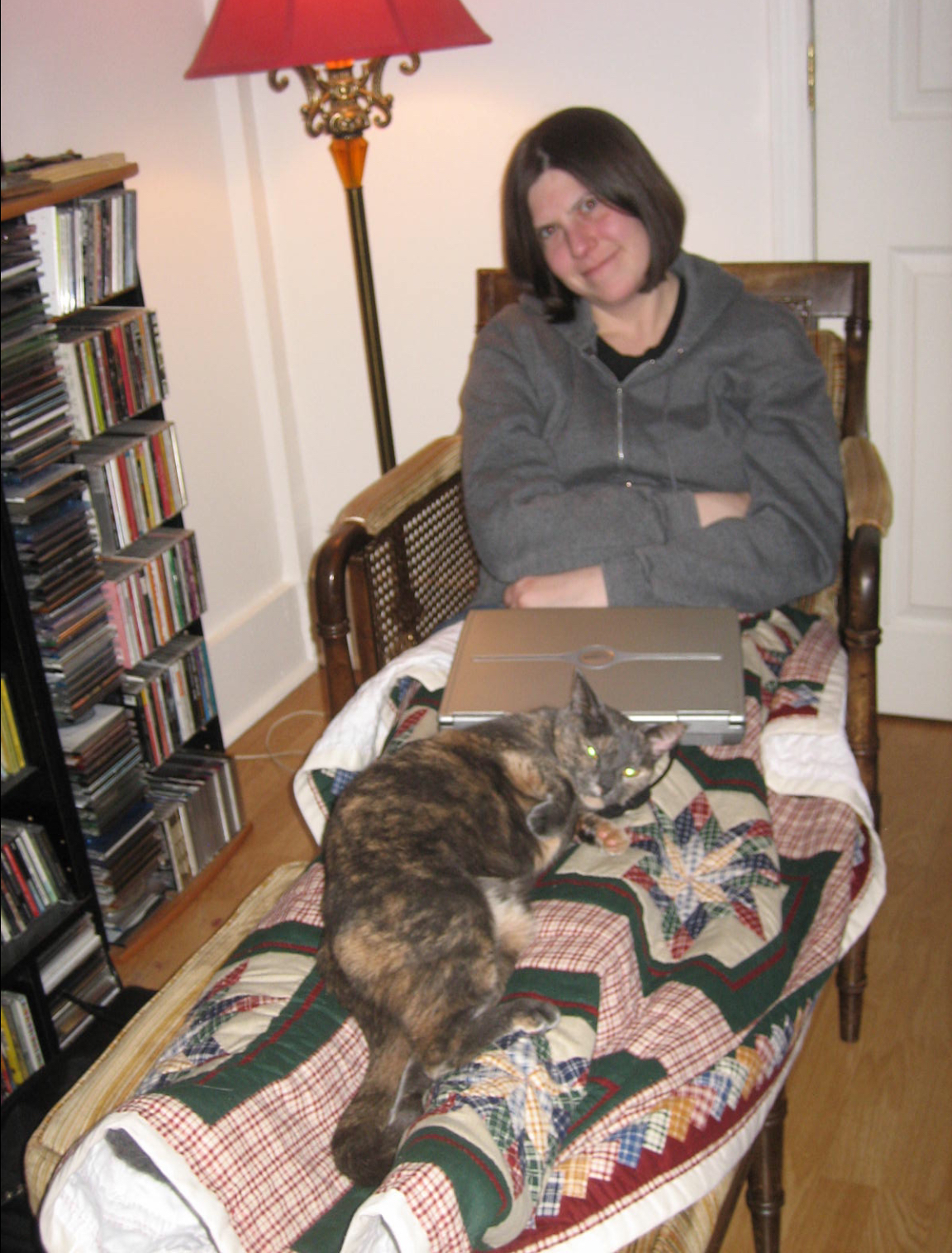
I stumbled upon this picture a month ago, during the beastliest summer heat. It was a funny reminder why I was so eager to leave Michigan winters behind me. Just looking at it, I can feel the frigid drafts wafting around that Victorian duplex. I know the absolute necessity of that hoodie and those two little quilts stretched over my lower half. And I can feel the relief of that warm cat resting atop my legs. I bet I was so happy when she hopped on my lap. She probably tried to lay her belly on my hands, like she always does whenever I’m writing. And I probably enjoyed that for a minute, but then scooted her down my legs so I could get back on the laptop. Over the years we’ve learned to compromise so we can enjoy the mutual benefits of body heat.

Physically, I’m a warmer-than-average creature. I remember being a little girl, trying to nap with my mom on muggy days and driving her out of the bed. “Oh Tara, I have to move. You’re too toasty!” When my best friend bought a Hypercolor t-shirt in eighth grade, I was the one who could turn it from purple to hot pink with just the lightest touch. My husband refers to my hands as “hot griddle cakes” which may or may not be something you want pressed on your body, depending on the season.

But I don’t think there was ever a time when my cat didn’t want a piece of these hot griddle cakes, which is probably why she’s always been partial to me. I’m the best radiator. She’s napped countless hours on my belly and chest, or even on my hip as I rest on my side. On warmer days she might opt instead for the “car wash,” in which I hold a hand around the top of her head and she walks back-and-forth so I can pet her from her noggin to her tail. She’s always been game for cheek rubs and gentle noogies between the ears. Sometimes she head-butts my hands until I comply, and before I really notice what’s happened, I find myself petting this creature perched on my lap. She’s a sneaky snuggler.

One of her more annoying snuggle habits is when she finds me doing a front plank hold and uses my flattened torso for her own fun version of “car wash.” Nothing like a tickling tail swatting against my abs to add a little spice to my core workout. On the other hand, I’m so grateful for every time I’ve had menstrual cramps and she laid her fuzzy, warm belly against my lower abdomen. She’s like a hot water bottle in mammal form, seeking comfort from my loving griddle cakes.

When we had a tumor removed from her belly earlier this summer, we knew the cancer would likely spread to her lungs. We watched for troubled breathing, but that never arose. It was her appetite that became a concern. Then came the limp. The night I finally decided I couldn’t put off the doctor’s visit any longer, I sobbed as she rolled on her back, exposed her belly, and let me lay my hand on the spot where they’d cut her open. The next day the vet found several more tumors in that very spot, growing toward her leg. He gave her prednisone for the inflammation, to make her more comfortable. She hid under my daughter’s bed for two days, until I started serving her CBD oil mixed with mayonnaise (her favorite treat).

I’ve never done palliative care for a creature before. The passage of time reminds me of the first few days of new parenthood, and how you’re constantly trying to read signals from this beloved little thing that cannot speak. When she was hiding under the bed all day, I couldn’t imagine allowing her to live that way much longer. But pain relief has made her more social, and now she frequently emerges from her lair in search of her snuggles. I’m heartbroken that she can’t climb upon my lap or chest anymore, but it isn’t her responsibility to comfort me. Rather I must bring to her the griddle cakes of solace.

A couple days into her CBD treatment, I set myself up for a yoga session. As I unrolled my mat, I thought of all the times she’d bugged me while I was planking and sighed wistfully for this unexpected sense of loss. She’s not that old for a cat, just eleven years; I thought she’d be irritating me with that bit for at least a few more years. But as I held my core aloft — forearms and tippy-toes to the ground — I heard the patter and drag of a four-legged limp, looked between my feet, and saw her approaching. She was determined to cause trouble. Her body wouldn’t let her crawl beneath me, so she just rested her rear paws and tail in an inconvenient spot directly beneath my knees, as if to say, “Sure would be a shame if you fell out of position, Mom. You wouldn’t want to smoosh an injured cat, would you?” As long as she’s being devilishly difficult and demanding snuggles, I know we’re not at the end of the line quite yet.

There’s No Co-Pay for Snake Oil

3F6246D1-335F-4CC7-BCBC-47E194A724CE

The thing I miss least about the health food store where I used to work was when nosy customers would bug me about my eczema. “What’s THAT on your hands?” they’d wonder aloud, despite there being nothing in my businesslike manner that would encourage such an intimate inquiry.

“It’s eczema,” I’d reply, using the same tone I reserve for speaking politely to someone else’s rude child.

“Oh.” They’d be silent for a moment. And then, inevitably, “Have you tried coconut oil?” Or alternately, “They’ve got this thing in the Wellness section that does wonders…”

In my head, I’d be cursing them and the coconut oil, or whatever $25 serum they’d been foolish enough to purchase from our Snake Oil Department. But out loud I’d just say, “Oh, cool! Good to know,” as I bagged their overpriced produce and soy-based frozen dinners. 

What I really wanted to say was, “Don’t talk to me about my fucking eczema.”

I’m not exactly sure what it was about that environment that brought out bad minders-of-their-own-business, but so it was. Maybe it’s weird that I took such offense regarding something that isn’t the worst of maladies (even if it’s kinda gross), and certainly isn’t my fault. But I don’t even like talking to doctors about it. 

The fact is, I’ve been struggling with this skin problem for 16 years. When the rash first arose, I was underemployed and uninsured. Getting medical help seemed impossible, so I just tried bandaging my broken flesh as if I had a hundred tiny cuts on my hand. My boyfriend at the time persuaded me to set up an appointment at the sliding-scale clinic, after much resistance from yours truly. 

“There’s no point!” I’d tell him. “It’ll probably clear up by the time they get me in.” He knew I was right, because it would be ten days before they’d see me. But he had a smart plan. He was a photographer, so he had me place my pus-oozing hand under a super bright neon lamp, took a picture, and printed an 8.5 X 11 glossy that I could take to my appointment.

So that’s what I did when I finally got to the appointment and — as expected — my hand wasn’t as sore as it was before. The physician who saw me was very nice and quite impressed with my visual aid. “Oh my god, the detail,” she said breathlessly as she eyed this portrait of my swollen, rash-covered flesh. “What a beautiful shot. How did he capture it?”

“Oh, he used a special lamp. He’ll be really excited that you’re excited.” It was one of the weirdest encounters I’ve ever had with a medical professional, and that’s saying quite a lot. She diagnosed my dyshidrosis (a type of eczema, often stress-related) and sent me home with some tiny sample tubes of steroid cream. I was supposed to apply it at night and wear cotton gloves to bed so it wouldn’t come off. I followed the first part of the advice, but not the latter because I had no idea where to get cotton gloves in July and I was broke. But it was enough to clear up the problem, for a while anyway. It always returns eventually, usually when I’m stressed out about money or getting ready to move.

But my current bout of rash (which has come and gone over the past six months) feels different from the dyshidrosis — less blistery, more dry and patchy. So I have at last arranged another appointment. The good news is that in 2018, I can use my phone to take my own damn picture of the flesh that may repair itself by the time I see a dermatologist. The bad news is that my copay for seeing a specialist is $92. This is why people pretend coconut oil is a cure-all. It might be pricy for a household product, but for many of us it’s way cheaper than going to the doctor.

This is just one of many reasons why I canvass with my Democratic Socialist comrades for Medicare for All. I fully believe that we’ll eventually have a single-payer system in this country, maybe even before I die. And I can’t wait for it to happen, so I never have to pretend the Snake Oil department is anything but a load of new age bullshit. But I also have this feeling that, even if I live long enough to see a doctor without a copay, I will still dread the experience.

The Future’s Gonna Be a Scary Place for Lonely People

As someone who’s far removed from these horrors, I’m having a hard time processing the fact that ethnic cleansing is happening right in front of us, right now. Knowing the government is tearing migrant families apart and literally torturing children has changed me as a person. At first, I just felt stymied by my powerlessness. I donated money to groups fighting these monsters, signed up for an ICE rapid response training. But it didn’t feel like enough. “You’re not DOING anything,” I’d chide myself as I scrolled through social media streams festooned with dispiriting headlines. During the day, when other tasks begged my attention, I could make myself put the phone away, push the thoughts aside long enough to do chores, raise my kid, look for a job, the usual.

At night, when my parenting duties were done, I’d get online again. Often I’d drink as I scrolled. There are just so many reasons to imbibe under the combined nightmares of Trumpism (a relatively new terror) and neoliberal capitalism (been creeping my whole lifetime). But most of the reasons are negative, and frequent drink takes a toll. I found myself exercising less, feeling more anxious. Eventually I reached that point in the summer, when the drama and tension that always seem to accompany long, sun-beaten days became so high-pitched I had to shake myself free of my bad habits and take an honest look at what was eating me. Why was I doing this to myself?

And because I now go to therapy, sometimes meditate, and usually try being nice to myself, that question quickly turned into, “Why the hell should I self-destruct because these shameless fascists are in power?”

Why should I drink for comfort (making me sluggish and cranky later) because they use their power to exploit, torment, and snuff people out?

Why should I attack myself for “not doing anything” when they have almost all the power? And what am I to accomplish if I’m feeling sluggish and cranky?

Why should I subject myself to scrolling through a constant stream of misery on Twitter when I could be organizing people and making friends in real life?

As an active socialist, I strive to be a humble cog turning within a larger, people-powered machine that will eventually dismantle these cruel, exploitative systems and institutions. But no one learns to be an effective cog by sitting alone in a quiet room, staring at a device. What I need more than a simple solution I can accomplish all by myself is a community. I need more people of good conscience who’ll look out for me just like I’ll look out for them. I need leftism  that shapes my everyday social life, but doesn’t alienate from those who feel disengaged. I need a reading group. I need to be accountable to others in doing the political work that is important to me. Because when I am accountable to others, I don’t slack off as much.

But here’s the catch – I’ve been living in this town for just one year and I know little about building community because I’m not a people person. I am a hardcore, unabashed introvert who loves spending time alone. Between my husband, my six-year-old daughter, the few friends I’ve made, and my various gigs (both paid and voluntary), I’m not exactly sure how I’m gonna make room for this chosen family I’m just starting to assemble. Until a couple years ago, I never saw myself as someone who particularly needed other people to get by. But when I ponder the future, and wonder what will be left if those in power persist in their rampage, I’m absolutely certain the only thing that will save us is each other.

And so I present The Introverted Comrade – a literary accompaniment to this community-building journey. I’ll present writings on a variety of subjects; I like using bits of memoir to talk about the human condition, so you’ll see a lot of that. Naturally I’ll talk about politics and social justice, though not from a journalistic standpoint. Guess I’m more of an amateur sociologist. In any case, I no longer know how to write about the world I see without talking about race, gender, and class, so you can expect all that to come up quite a bit as well. And through that lens I’ll discuss pop culture, because that’s a personal passion and a way I connect with others in writing and in conversation.

Thank you for being here. Writing is one way I can seek your companionship and understanding, even when I very much need to sit alone in a quiet room, staring at my device.